
What's behind the healing?


Physics has already proven that nothing is as solid as it looks. Your chair, your phone, your own body — all of it is energy in motion.
Matter and energy turned out to be two forms of the same thing, and at the deepest level matter behaves less like solid stuff and more like vibration. Modern physics confirmed what healers across cultures sensed for millennia: everything is energy, and everything vibrates.
Some of the science:
Sound is used in medicine. Western medicine has used it for decades. Ultrasound images a baby and breaks up kidney stones; it's vibration put to work. The idea that sound acts on living tissue isn't fringe — it's already in the hospital.
Entrainment. Rhythms tend to fall into sync, everywhere in nature. Pendulum clocks on the same wall drift into step. Fireflies flash together. Our sleep-wake cycles lock to the daily light-dark rhythm. And brainwaves can shift toward the rhythm of a steady sound — which is why slow, rhythmic tones ease the mind toward calm. Examples of entrainment include:
Heart rate: When people are in close proximity to each other, their heart rates can entrain. This is because the heart is a biological oscillator that is sensitive to external cues, such as the sound of another person's heartbeat.
Brainwaves: When people listen to certain types of music or sounds, their brainwaves often entrain to the frequency of the sound. This is thought to be one of the mechanisms by which music can have a calming or stimulating effect on the mind.
Circadian rhythms: Our circadian rhythms -- or our natural sleep-wake cycles -- are entrained to the 24-hour, light-dark cycle. This means that our bodies are programmed to sleep at night and be awake during the day.
Sound creates deep relaxation. When the body settles deeply, real things change — the breath slows, the heart eases, the nervous system steps out of fight-or-flight. The effect of sound on the body has been measured, and most actually leave a session feeling lighter and more at peace than before they came.
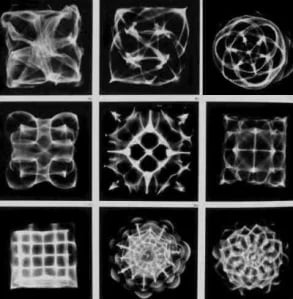
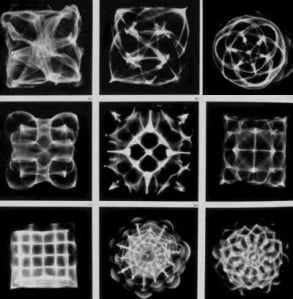
Cymatics. This is based on the principle that every sound vibration has a corresponding geometric pattern. Da Vinci watched dust form patterns on a vibrating table; in the 1950s Dr. Hans Jenny named the field cymatics. Scatter sand on a plate, add a frequency, and the grains arrange into clean geometric shapes that change with the pitch. Vibration organizes matter, right in front of your eyes.
Cymatics explores the impact of sound frequencies on healing. By using specific frequencies, cymatics can influence the body's energy and promote healing on a cellular level. When sound waves interact with the body, they create resonance to restore balance and harmony to the mind, body, and spirit.
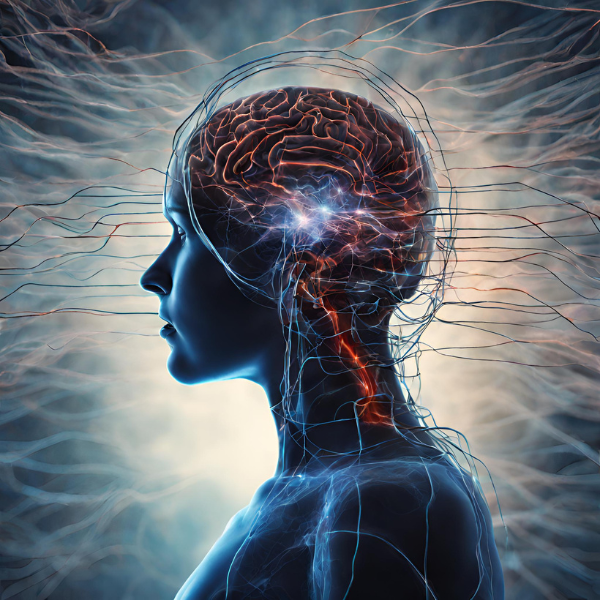
Frequency moves thru water. Your body is roughly 60 to 70% water, and water carries vibration far better than air does. So sound doesn't only reach your ears — it travels through the fluids of your entire body. A tuning fork or a sound bath is felt all over, not just heard.
Embracing Ancient Traditions
What follows has been witnessed, felt and reported for generations.
The body's energy
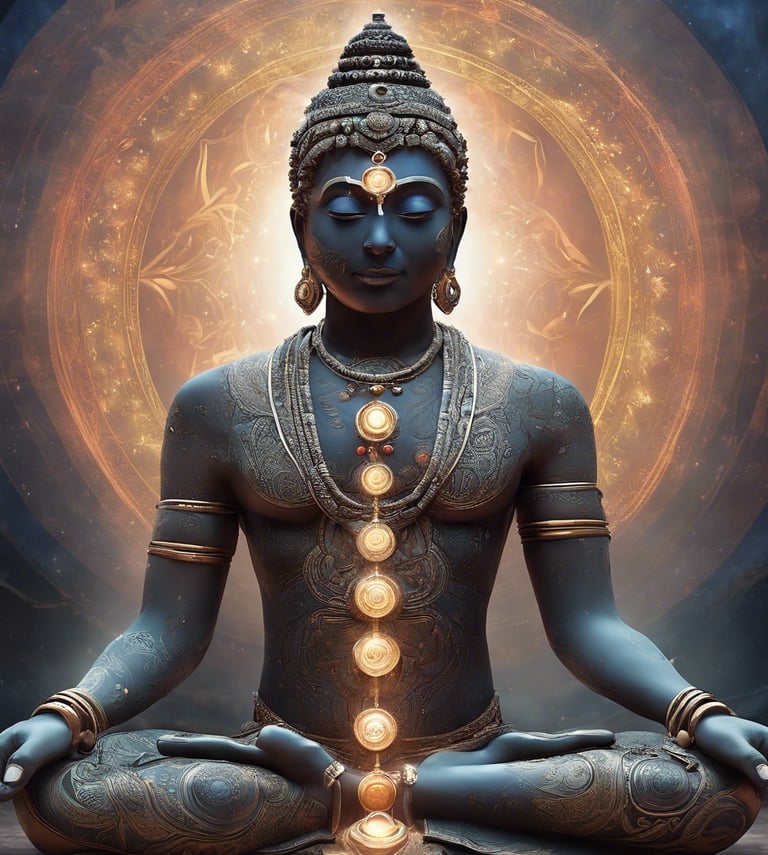
Chakras come from ancient Indian and yogic tradition — a map of energy centers running up the body, each tied to different physical and emotional themes. The idea is that energy can pool, block, or move freely through them, and that wellbeing follows the flow.
Meridians are the energy pathways at the heart of Traditional Chinese Medicine, thousands of years old. Acupuncture (with needles) and acupressure (with touch) work along these lines to free up stuck energy. The pathways don't appear on a Western anatomy chart — but the practices built on them have been used and refined for millennia.
Reiki is a hands-on energy practice developed in Japan in the early 1920s. A practitioner channels energy to where the body needs it, to calm the nervous system and support the body's own healing. Newer than the systems it draws from, it's become one of the most widely practiced energy modalities in the world.
Frequency, earth, and water
Solfeggio tones Rooted in ancient musical traditions, Solfeggio tones are a set of frequencies that have been used for centuries to facilitate healing and spiritual growth. These frequencies are believed to correspond to a specific aspect of the human experience:
174 Hz: Pain relief and relaxation.
285 Hz: Supports healing and tissue repair.
396 Hz: Releases fear and guilt.
417 Hz: Promotes change and clears negativity.
528 Hz: DNA Repair, Stress relief and inner peace.
639 Hz: Supports love, communication, and connection.
741 Hz: Cleansing and self-expression.
852 Hz: Boosts intuition and spiritual awareness.
963 Hz: Referred to as the “God frequency.”
The Schumann resonance is a real, measurable electromagnetic pulse between the Earth's surface and the ionosphere, around 7.83 Hz — sometimes called the planet's heartbeat. The resonance is physics; the idea that living things feel steadier in step with it is being studied at NASA.
Grounding (or earthing) means direct contact with the Earth — bare feet on grass, soil, or sand. The idea is that the body takes in the Earth's natural charge, which may help calm inflammation and settle the nervous system. People reliably report feeling better for it, and research is only beginning to study why. Given how much chronic illness traces back to inflammation, it may prove more important than we yet realize.

What's next?
There is so much still to learn — and that's the part that excites me most.
Research into sound and energy grows every year, and the science keeps confirming what people have felt for generations. What's known and used today already rests on real evidence that it works; what isn't proven yet isn't wishful thinking — it's simply waiting for science to catch up.
I find my work is on that cusp — where science meets what some would call faith.
Got questions? Contact us